


In electronic music, venues don’t just host history—they become it. For Carl Cox, few spaces embody that truth more than The Arches in Glasgow. Years after its closure, the legendary underground club still lingers in his memory not as a faded chapter, but as a living reference point for what club culture once was—and what it risks becoming.
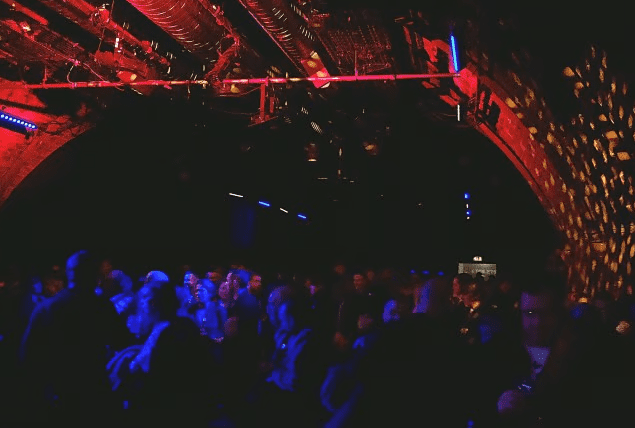
Speaking ahead of his return to Scotland for the Pavilion Festival in Ayrshire, Cox revisits The Arches with a clarity shaped by time. His words carry less nostalgia than recognition: this wasn’t just a venue, it was a cultural infrastructure.
The Arches: More Than a Club, a State of Freedom
Tucked beneath Glasgow’s railway arches, The Arches was never designed to be ordinary. It became one of the UK’s most influential underground spaces precisely because it resisted categorisation. For Cox, it wasn’t just another stop on the touring circuit—it was a creative home.
In his recollection, the essence of the venue wasn’t scale or sound system—it was permission. Permission to play without expectation, to move between genres without justification, and to exist outside of judgment.
That freedom is what defined The Arches in its prime. It was a space where the only currency that mattered was music itself.
A Closure That Still Echoes Through the Scene
The venue shut its doors in 2015 after licensing restrictions and legal pressures forced its administration, marking the end of one of Scotland’s most important club institutions. What followed was not just the loss of a building, but a rupture in Glasgow’s nightlife identity.
Cox describes that absence in simple terms: it remains “a big loss to the city.” But beneath that statement lies a wider concern shared across the electronic music world—the gradual erosion of spaces where club culture can exist without compromise.
Across the UK, similar stories have unfolded. Rising costs, regulatory pressure, and shifting urban priorities have steadily reduced the number of long-standing venues that once defined entire scenes. The Arches is not an isolated case—it is part of a pattern.
Glasgow and the Culture That Endures
Despite this loss, Glasgow’s reputation as a global club city has not disappeared. Instead, it has evolved, carried forward by new generations of artists and promoters who continue to build within increasingly constrained conditions.
Events like the Pavilion Festival, led by Ewan McVicar, reflect that continuity. They exist in the space left behind by venues like The Arches—larger in scale, more temporary in structure, but still rooted in the same cultural DNA of community-driven dance music.
For Cox, returning to Scotland remains meaningful not because of nostalgia alone, but because of that ongoing energy. The scene may have shifted, but the connection between artist and audience remains deeply embedded in the region’s identity.
The Evolution of a DJ Who Never Stopped Moving
Across four decades, Carl Cox has remained one of electronic music’s most enduring figures—not by staying static, but by refusing it. From rave culture to global techno stages, his career has been defined by constant movement between styles, eras, and technologies.
That adaptability is part of why his reflections on The Arches resonate beyond personal memory. They are not just about one venue, but about a philosophy of nightlife: that clubs are not interchangeable spaces, but ecosystems shaped by trust between DJ and crowd.
In Cox’s view, that trust is what made places like The Arches irreplaceable.
The Quiet Crisis Behind the Dancefloor
Beneath the celebration of festival culture and global touring lies a quieter tension in electronic music: the disappearance of foundational spaces. Not headline arenas, but mid-sized, underground venues where scenes are formed rather than performed.
The closure of The Arches represents more than architectural loss—it represents a shift in how club culture is experienced, regulated, and sustained.
And while new festivals and superclubs continue to emerge, the question Cox’s reflections raise is harder to answer: what happens when the places that shaped the culture no longer exist?
Memory, Music, and What Remains
What lingers in Cox’s words is not mourning, but clarity. The Arches was a moment in time when club culture felt less mediated—less filtered through industry expectations and more grounded in pure presence.
That version of nightlife may be gone in its original form, but its influence persists in every DJ who still treats the dancefloor as something sacred rather than transactional.
And perhaps that is the real legacy of The Arches: not that it closed, but that it still defines how we talk about what was lost.