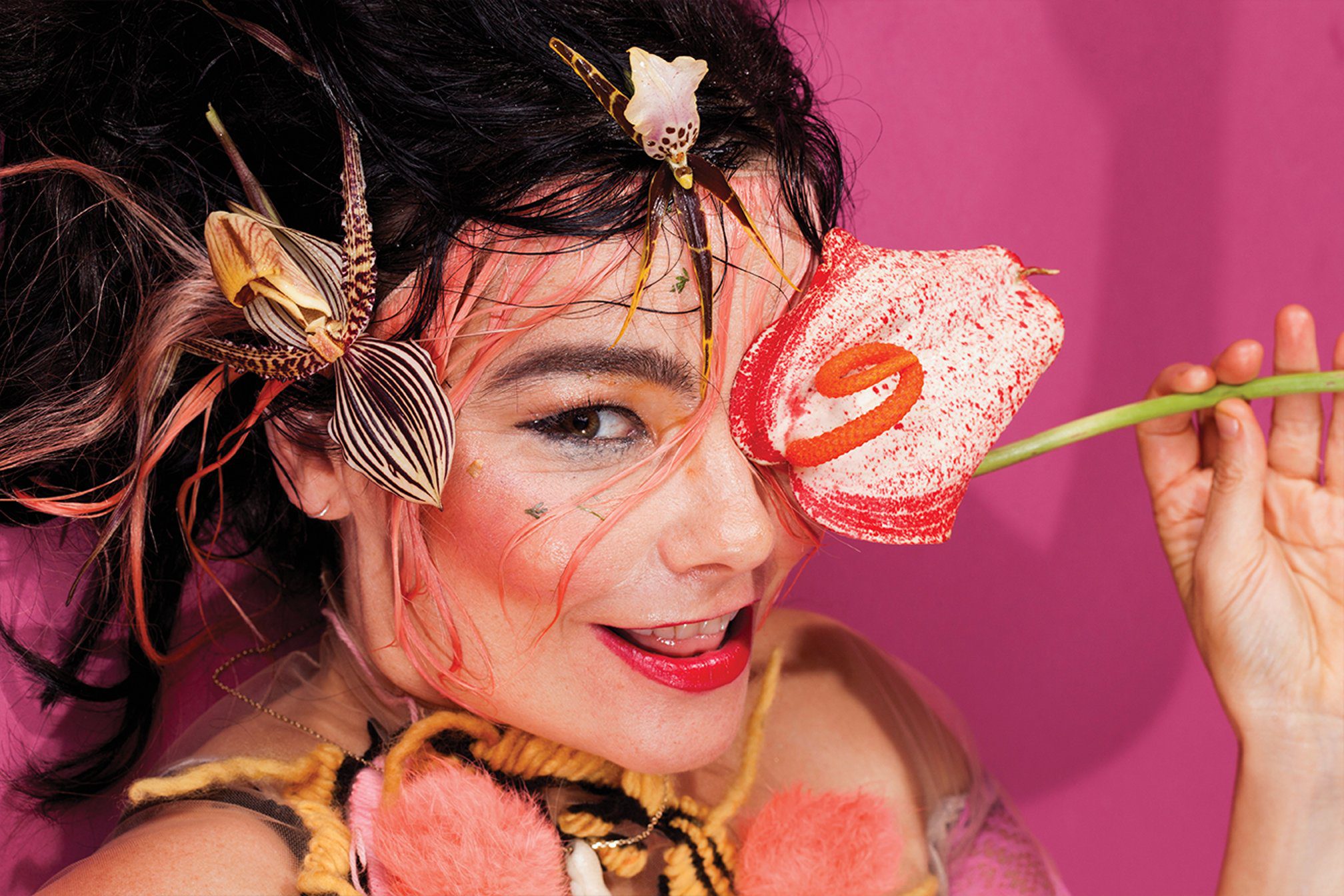
Björk delivered a genre-defying DJ set at Rome’s Dissonanze Festival over the weekend, moving between experimental electronics, leftfield pop, global club sounds and contemporary dance music.
The Icelandic artist performed at the Auditorium Parco della Musica Ennio Morricone on Saturday, 12 September, as part of the festival’s New Chapter edition. The two-day event explored the meeting point between electronic music, digital art and forward-thinking club culture.
Björk’s Eclectic Selection
Björk’s set covered an unusually broad sonic spectrum, featuring music from artists such as underscores, ABADIR, Arca and Kelela.
Among the tracks included in her selection were underscores’ “Unlimited Love”, ABADIR’s “The Primitivist”, and music from Nyege Nyege Tapes’ singeli innovators DJ Travella and Jay Mita.
The set reflected Björk’s long-established interest in experimental sound and unconventional musical structures. Rather than following a single club genre, her selections moved through contrasting moods and rhythms, connecting avant-garde pop, underground electronics and rapidly evolving global dance scenes.
Following the performance, Björk uploaded a selected tracklist and clips from the set to Instagram, giving fans a closer look at the music behind the performance.
A Distinctive Festival Appearance
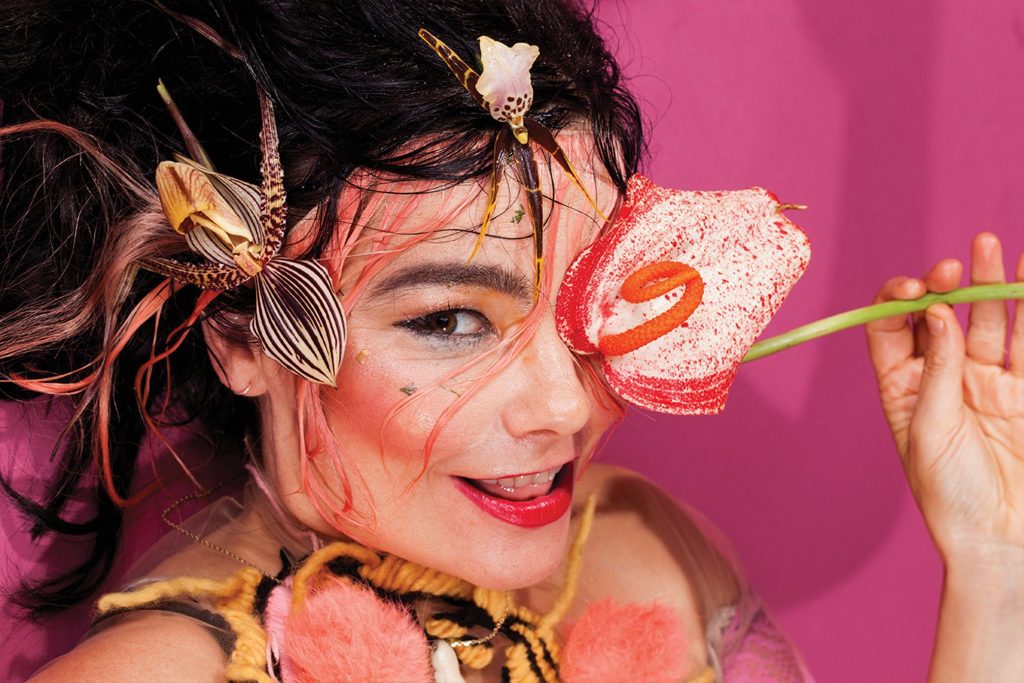
For the occasion, Björk appeared in an outfit by Kit Wan Studios, complemented by a mask created by Karina Bond.
The visual presentation added another layer to an already unconventional performance, reinforcing the artist’s reputation for treating music, fashion and visual identity as part of the same creative language.
Björk’s appearance was one of the most anticipated moments of Dissonanze’s 2026 edition, which also featured Peggy Gou, Honey Dijon, Floating Points, Kelly Lee Owens, Moodymann, Ron Trent, Skream & Benga and several other influential artists from the international electronic music scene.
From Echolalia to Rome
The Rome DJ set follows a series of increasingly visible appearances behind the decks.
In August, Björk hosted her own one-day Echolalia festival in Hafnarfjörður, Iceland, timed to coincide with the country’s total solar eclipse on 12 August. The project brought together artists including Arca and Kaitlyn Aurelia Smith.
Echolalia has also expanded beyond the festival format, with an accompanying exhibition currently presented at the National Gallery of Iceland.
These projects underline Björk’s continuing interest in curating unusual artistic environments rather than simply performing within established concert or club formats.
Björk’s Expanding Dance Music Connection
Björk’s relationship with club culture has been a recurring part of her artistic history. Her landmark 1995 album Post incorporated influences from house, techno, breakbeat and other forms of electronic music, helping establish a connection between experimental pop and the dancefloor.
Earlier this year, she also joined Rosalía on stage at the 2026 BRIT Awards to perform their collaboration “Berghain.”
With her latest DJ appearances, Björk continues to explore electronic music as both a performance format and a space for discovery. Her Dissonanze set was less about conventional genre boundaries and more about creating a constantly shifting musical world, guided by curiosity and instinct.