
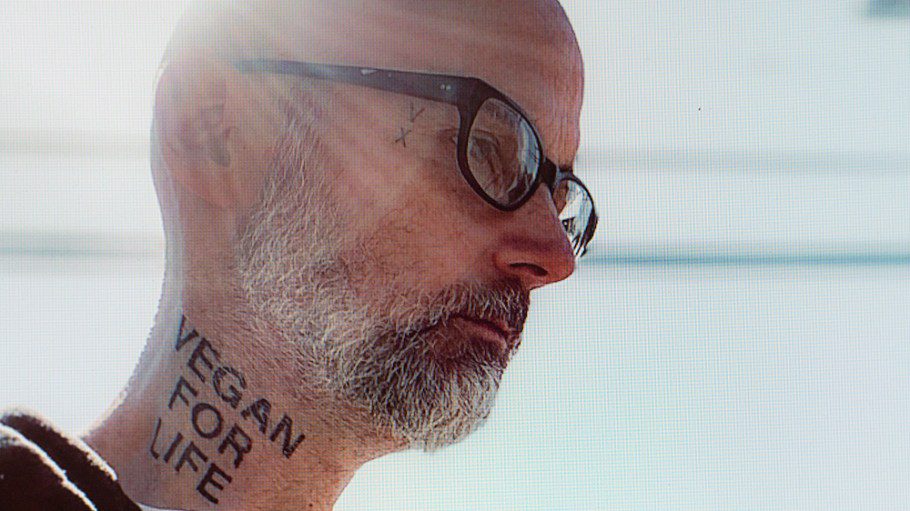
Moby has called on the vegan community to put aside internal disagreements and focus its collective energy on challenging industrial animal agriculture.
The electronic music icon and longtime animal rights advocate delivered an impassioned speech at Vegan Camp Out, urging members of the vegan movement to support one another rather than allowing internal divisions to distract from the wider cause.
Speaking to the crowd, Moby reflected on his own decades-long commitment to veganism and encouraged those in the community to approach one another with greater understanding.
“I have been vegan for 39 years,” the producer said. “That means at some point, everyone in this room was eating hamburgers and bacon while I was vegan. And I don’t judge you, so therefore you don’t judge each other.”
Moby calls for an end to vegan community infighting
The central message of Moby’s speech was clear: disagreements within the vegan community should not overshadow the broader fight against industrialized animal agriculture.
“We know who the enemy is,” he told the audience, before pointing toward major fast-food corporations, agricultural companies and concentrated animal feeding operations as the forces he believes the movement should be challenging.
“When we fight amongst ourselves, they fucking win,” Moby added, calling on members of the community to “support each other as much as we can.”
The comments underline a recurring theme in Moby’s activism: collective action. Rather than focusing on differences in individual approaches to veganism, the producer argued that the movement is stronger when its members work together toward a shared objective.
A four-decade commitment to animal rights
Moby’s relationship with veganism and animal rights has been central to his public identity for decades.
Beyond his career as one of electronic music’s most recognizable artists, he has consistently used his platform to advocate for animals. His activism has included writing, public campaigning and involvement in projects designed to raise awareness around animal welfare and the environmental consequences of industrial animal agriculture.
That long-term commitment gives particular weight to his message at Vegan Camp Out. After nearly four decades as a vegan, Moby positioned his own experience as an argument for empathy rather than judgment within the community.
His comments also reflect a broader challenge facing activist movements: maintaining unity while accommodating different approaches, priorities and beliefs among supporters.
Moby continues to balance music and activism
The speech arrives during another active period in Moby’s career.
The producer recently performed at the Old Royal Naval College in London and continues to combine his musical work with his longstanding advocacy. His upcoming schedule also includes a headline performance with Underworld at The Rose Bowl in November.
For Moby, music and activism have rarely existed as entirely separate worlds. His public work has frequently connected electronic music culture with social and environmental causes, allowing him to reach audiences far beyond the traditional activist sphere.
The Vegan Camp Out appearance therefore represents another chapter in an approach that has defined much of his career: using the visibility that comes with being a globally recognized artist to amplify issues he considers important.
“The animals need all of our strength”
Moby’s message ultimately went beyond veganism itself. His appeal was for solidarity.
While disagreements over lifestyle choices, activism and strategy can create divisions within any movement, the producer argued that internal conflict risks weakening the broader cause.
His closing sentiment was direct: “The animals need all of our strength and all of our support.”
The speech adds another notable moment to Moby’s decades-long history of animal rights advocacy, while reinforcing his belief that cooperation should remain at the center of the movement.
As Moby continues his musical career alongside his activism, his latest comments serve as a reminder that his role within electronic music extends well beyond the studio and stage.