
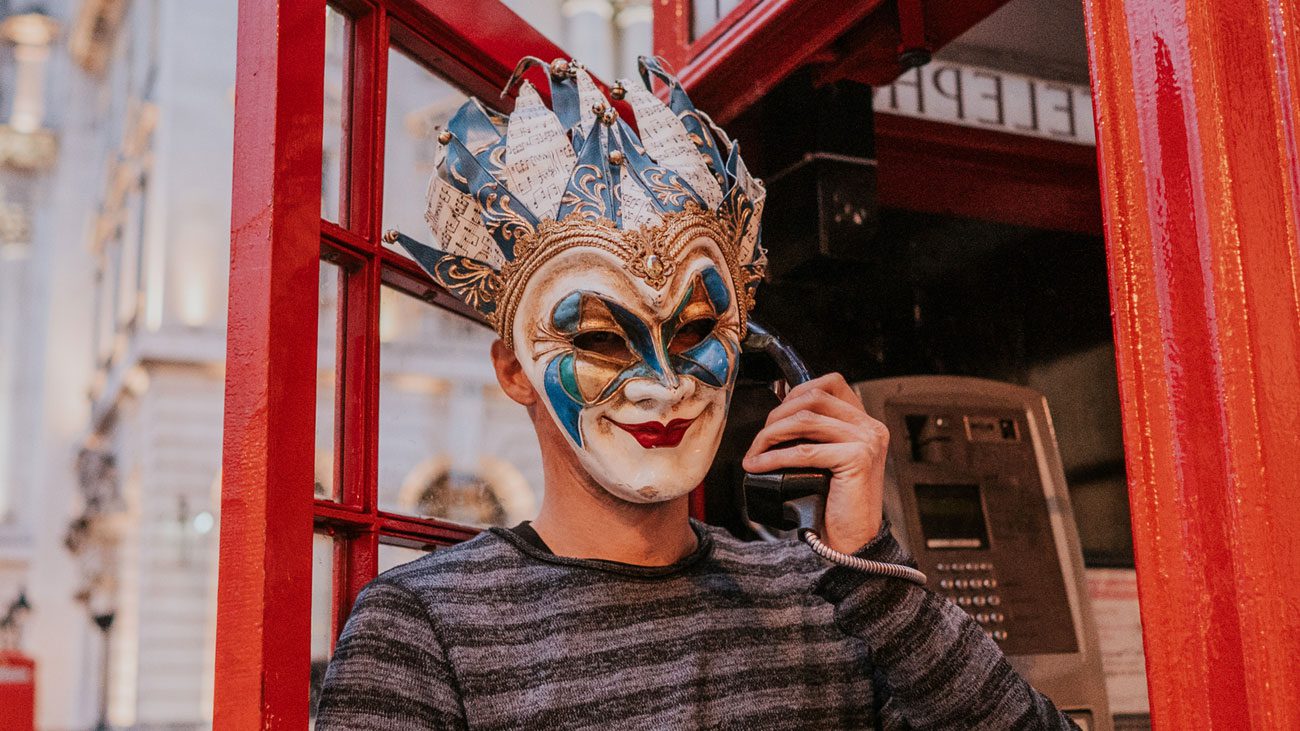
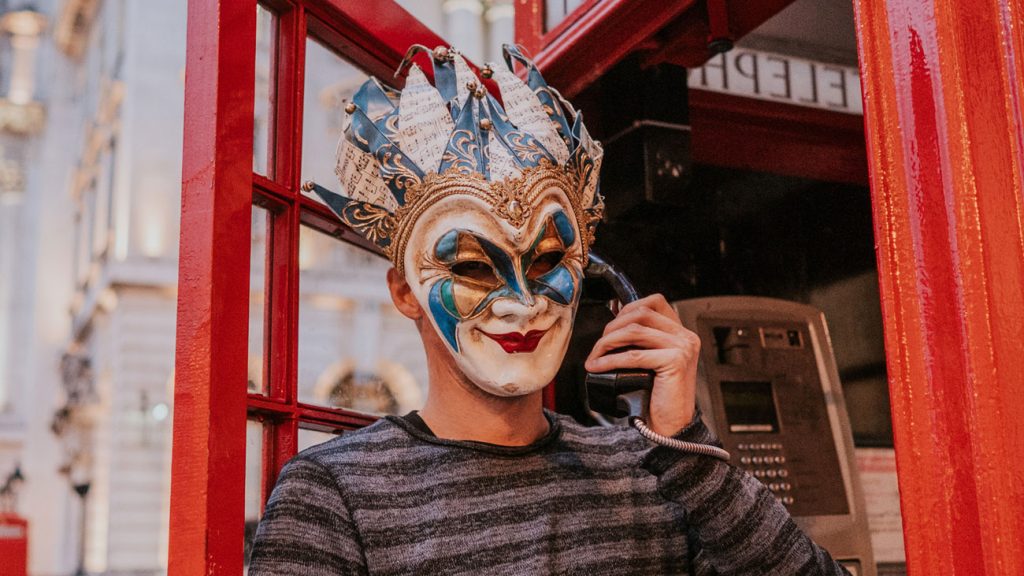
After years of building a world around his unmistakable mask and high-tech minimal sound, Boris Brejcha has announced that 2028 will mark the final chapter of his career under the name that made him a global force in electronic music.
Every artist eventually faces a question that success can make harder to answer: when is the right time to stop?
For Boris Brejcha, the answer has arrived well before the music has faded. In an emotional video message, the German producer has revealed that 2028 will be his final year performing as Boris Brejcha and his masked alter ego, The Joker. Rather than describing the decision as an escape from exhaustion or a loss of creative drive, he has framed it as a deliberate ending, shaped by reflection and a desire to leave the story on his own terms.
“My dad always used to say that you should stop when things are at their best,” Brejcha explained, announcing plans to play as many shows as possible throughout 2028 as a final thank-you to his fans. At the end of that year, he intends to close the chapter entirely.
The announcement carries particular weight because it comes at a moment when his career remains firmly in motion. From major festival stages to headline performances at prestigious venues, Brejcha continues to occupy a distinctive position in global techno. His decision is therefore not a response to an obvious decline, but a choice to define the ending himself.
For fans, the news marks the beginning of a countdown. For electronic music, it raises a broader question about the relationship between artistic identity, longevity and the courage to bring a successful chapter to a close.
The Joker Was Never Just a Mask
Boris Brejcha’s rise has been closely tied to a visual identity that is instantly recognisable. The Joker mask became a defining part of his performances, setting him apart in a genre where the DJ is often expected to communicate primarily through music.
But the mask was never the whole story. Behind it sits a musical approach Brejcha has developed into a signature sound, commonly associated with high-tech minimal: precise, driving rhythms, intricate electronic details and arrangements that balance hypnotic repetition with a strong sense of momentum.
His performances combine those elements with a carefully constructed visual world. The result is an artist whose identity extends beyond individual tracks or releases, creating a recognisable experience that audiences can identify across festivals, clubs and large-scale headline shows.
That distinction matters in contemporary electronic music. The international DJ circuit is crowded with artists competing for attention across streaming platforms, social media and increasingly elaborate live productions. A coherent musical and visual identity can become a powerful way to establish a lasting connection with an audience.
Brejcha has built that connection over years of touring and releasing music, turning his particular blend of sound and presentation into an international brand without losing the central role of the music itself.
The announcement that both Boris Brejcha and The Joker will reach their conclusion in 2028 suggests that he sees these elements as parts of the same story. This is not simply a change in stage design or the retirement of a costume. It is the planned ending of an artistic identity that has helped define his public career.
A Farewell Announced at the Height of Momentum
The timing makes the decision all the more striking.
In 2026, Brejcha has played the Mainstage at Tomorrowland, headlined London’s Alexandra Palace and joined Eric Prydz for their first-ever back-to-back performance. These milestones place the announcement against a backdrop of continued visibility and ambition, rather than a gradual retreat from the international circuit.
Each represents a different dimension of his standing in electronic music. Tomorrowland is one of dance music’s most visible global platforms, while an Alexandra Palace headline show demonstrates the scale of his audience beyond the traditional club environment. The collaboration with Prydz, meanwhile, brought together two established artists with distinctive identities and approaches to electronic production.
Taken together, those moments help explain why the announcement has the potential to resonate beyond his existing fanbase. Brejcha is not stepping away after disappearing from view. He is choosing to set an end date while his work remains relevant and his performances continue to attract major audiences.
That is an unusual kind of agency in a touring industry built around constant forward motion. Artists are often encouraged to extend successful formulas for as long as demand remains strong, particularly when an established identity can sustain headline bookings and international recognition. Choosing to stop while that momentum remains intact challenges the assumption that success should always lead to more.
Brejcha has been careful to clarify that he is not sick and has not lost his passion for music. In his written statement, he emphasised that the decision followed a long period of reflection and was entirely his own.
That clarification matters. It frames the announcement not as an emergency or a sudden withdrawal, but as a considered personal decision about how and when a particular chapter should end.
A Final Chapter, Not a Sudden Goodbye
Brejcha has described the coming period in the language of storytelling. Like a good book with a happy ending, he wants the final chapter to feel complete, inviting his audience to participate in the closing moments rather than simply receive news of an abrupt departure.
The plan is to play as many shows as possible throughout 2028, transforming the final year into an extended farewell. Details of the performances have not yet been announced, leaving open the question of which cities, venues and festivals will become part of the final run.
That uncertainty is likely to intensify anticipation as plans develop. For fans who have followed Brejcha across years of releases and live performances, the farewell shows will carry a meaning different from a conventional tour. Each appearance will become part of a finite series, with the knowledge that the familiar combination of artist, mask and sound has a defined ending.
His message also places the audience at the centre of that conclusion. Brejcha spoke about the strength fans have given him throughout his career and his desire to give that strength back one last time by celebrating together in 2028.
It is a notably personal framing for an announcement about a globally established electronic artist. Instead of presenting the farewell as a purely individual milestone, he has described it as something to be shared with the people who helped sustain the journey.
The approach also reflects the social nature of dance music. A DJ’s career may be built through records, production and touring, but its most memorable moments often happen collectively, when a crowd recognises a track, responds to a transition or becomes part of a performance’s atmosphere. A farewell tour turns that relationship into the central theme.
What Does Retirement Mean for an Electronic Music Icon?
Brejcha’s announcement leaves an important distinction to be understood: he has said that his career as Boris Brejcha and The Joker will end at the close of 2028. He has not announced a separate future project or explained what his life and creative work will look like afterward.
For now, the focus remains on the final chapter he has promised. Any speculation about a new alias, a different musical direction or a return after the farewell would be premature.
That restraint is important because the announcement is significant precisely as it stands. In an industry where reinvention is common and retirement announcements can sometimes function as temporary marketing moments, Brejcha has given fans a specific year and a clear intention to close this identity.
Whether the end of 2028 also marks the end of his relationship with music in a broader sense remains unknown. His insistence that his passion is intact suggests that the decision should not be confused with creative exhaustion. Instead, he appears to be drawing a boundary around one chapter of his life and career.
There is something compelling about that choice. The Joker identity has become so closely associated with Brejcha that its ending carries the emotional weight of a character leaving a story. Yet behind the public persona is an artist who has the right to decide how long that story should continue.
The wider electronic music scene is built around reinvention, but it rarely pauses to consider the value of a deliberate ending. Tours extend, festivals expand and successful artists are encouraged to preserve their momentum. Brejcha’s announcement offers a different perspective: a career can be celebrated not only through how long it lasts, but through the intention with which it is concluded.
Leaving on His Own Terms
The most powerful part of Brejcha’s announcement is its simplicity. He has not presented the decision as a crisis, nor suggested that his audience should mourn an immediate disappearance. Instead, he has offered a date, an explanation and a promise to make the final year meaningful.
There is still plenty of time before the closing chapter begins in earnest. The precise shape of the 2028 farewell remains unknown, and the performances themselves have yet to be announced. But the emotional framework is already in place: gratitude, celebration and a conscious decision to finish while the story still feels alive.
For an artist whose mask has become one of electronic music’s most recognisable symbols, the final performance will inevitably invite reflection on what the Joker has represented. Yet the lasting legacy will be more than a visual persona. It will also be the music, the international audience built around it and the particular sound Brejcha helped establish within contemporary techno.
Success is often measured by what comes next: the next release, the next headline show, the next stage to conquer. Brejcha is proposing a different measure. Sometimes, the most meaningful final act is the one chosen before circumstances make the choice for you.
In 2028, Boris Brejcha intends to give The Joker a proper ending. Until then, the story is still being written, and the final chapter will belong not only to the artist behind the mask, but to the fans who have travelled alongside him.