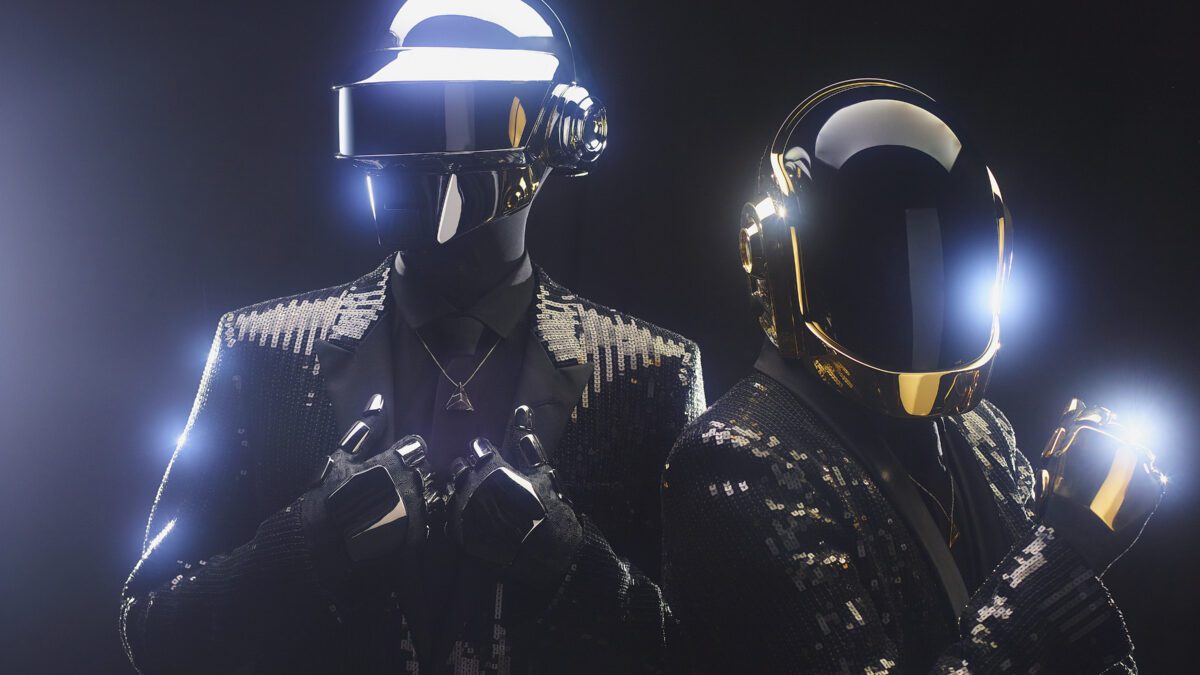
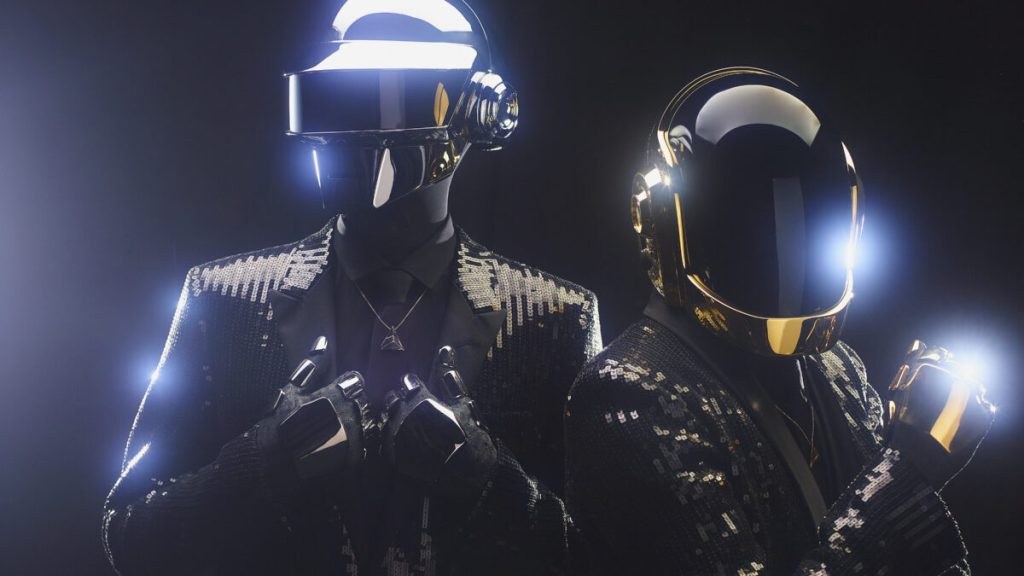
Daft Punk may have officially shut down the project in 2021, but the universe surrounding the French electronic duo has never depended on music alone.
The helmets, the futuristic alter egos, the cinematic storytelling and the persistent question of what separates a human being from a machine have become part of a cultural mythology that continues to inspire artists long after Thomas Bangalter and Guy-Manuel de Homem-Christo stepped away from the robots.
Now, that mythology is entering another medium.
An authorised special edition of Métal Hurlant, the influential French science-fiction comics anthology, brings together more than 30 creators for a 272-page collection inspired by Daft Punk’s imagery, history and recurring fascination with technology and identity.
Published by Humanoids, the anthology is not designed as a conventional biography. Instead, it treats Daft Punk as the starting point for a collection of speculative stories, illustrations and essays, allowing different creators to reinterpret the ideas that have made the duo one of electronic music’s most distinctive cultural forces.
The result promises to explore a world that has always existed somewhere between the dance floor and science fiction.
Beyond the Music: The Daft Punk Universe
Few electronic acts have built such a recognisable visual identity.
From the robotic helmets to the carefully controlled public image, Daft Punk created a separation between the people behind the music and the characters audiences encountered. That distance did more than generate intrigue. It allowed the duo to build a fictional universe around their work, one in which technology, performance and identity were inseparable.
Their anonymity was never simply an absence of information.
It was a creative device.
The robots became characters capable of carrying ideas that extended beyond the artists themselves. They could represent the tension between humanity and technology, the emotional possibilities of machines and the strange intimacy that can emerge between people and music made through electronic instruments.
The new Métal Hurlant collection draws directly from that territory.
Rather than attempting to define what Daft Punk means, it gives a new generation of storytellers the freedom to explore the possibilities their mythology opened up.
A Creative Circle Returns
The anthology also reconnects Daft Punk with artists who helped establish the duo’s visual language.
Cédric Hervet, their longtime creative director, and Warren Fu, the artist and illustrator associated with the visual identity of their final studio album, Random Access Memories, have designed an exclusive cover for the special edition.
Their involvement gives the project a connection to the original creative world rather than positioning it as an entirely external tribute.
Fu and Hervet helped shape the visual universe through which audiences encountered Daft Punk during one of the most celebrated periods of their career. Bringing them back into a project built around science fiction and illustration creates a meaningful link between the duo’s established aesthetic and its continuing reinterpretation.
A separate cover features artwork by Anuj Shrestha, offering another visual entry point into the anthology.
The collection’s broader appeal, however, lies in its diversity of voices. With more than 30 creators contributing, the project has room to move beyond a single interpretation of the robots and the world they represent.
Daft Punk’s legacy becomes the foundation, not the boundary.
From Discovery to the Comic Page
Science fiction has been central to Daft Punk’s creative identity for decades.
In 2003, the duo collaborated with legendary manga artist Leiji Matsumoto on Interstella 5555: The 5tory of the 5ecret 5tar 5ystem, an animated film that translated the entirety of their Discovery album into a largely dialogue-free visual narrative.
The project remains one of the most striking examples of an album functioning as a cinematic experience. The music and animation were not separate products designed to promote one another. They formed a unified story, with the songs carrying the emotional weight of the narrative.
The duo extended that interest in cinematic world-building with Electroma, their 2006 film following two robots attempting to become human.
Where Interstella 5555 embraced colourful animation and pop-futurist adventure, Electroma adopted a more austere, contemplative approach. Beneath both projects, however, sat a recurring question: what does it mean to be human when identity can be constructed, concealed or transformed?
The new comic anthology returns to that question from another direction.
Comics are particularly suited to this kind of storytelling. They allow creators to move between realism and abstraction, building entire worlds through visual details while leaving room for readers to interpret what they see.
For Daft Punk, whose music has always existed alongside carefully constructed imagery, the format feels like a natural continuation of their artistic language.
Why the Robot Still Matters
The cultural life of Daft Punk’s robots raises an interesting question about the relationship between an artist and the identity they create.
The duo’s separation in 2021 might have ended their active partnership, but it did not close the imaginative world surrounding their work.
Their influence continues through music, fashion, visual art, film and the wider electronic music culture that grew alongside them. The helmets have become instantly recognisable symbols, while their approach to visual storytelling helped establish a model for electronic artists interested in creating an identity that extends beyond the stage.
The anthology suggests that this influence can survive through reinterpretation rather than imitation.
More than 30 creators approaching the same mythology will inevitably produce different perspectives. Some stories revisit elements of the duo’s career, while others explore broader themes involving technology, identity and the complicated relationship between humans and machines.
That variety is important. A cultural legacy becomes more interesting when it can support new interpretations rather than remaining fixed in the form its creators originally intended.
Daft Punk’s universe has always been open to that possibility because its central ideas were never limited to the personal histories of the two musicians.
The robots can belong to a story about fame, alienation, technological progress or the desire to become something more than oneself.
That is what makes them enduring characters rather than simply memorable costumes.
Becoming Part of the Fiction
Humanoids is also offering fans an unusually direct way to enter the anthology’s fictional world.
A limited number of portrait slots, priced at $249.99, allow buyers to have their likenesses included in an imagined Daft Punk concert scene illustrated by Florian Breuil. The option is available as an add-on when pre-ordering through the publisher.
It is a premium opportunity, but the concept fits the project’s wider approach to fandom.
Daft Punk’s concerts and visual productions have often presented audiences with a carefully constructed world to enter. Here, that relationship becomes literal: selected fans can become part of the imagined scene rather than remaining outside it.
The idea also reflects how contemporary fandom increasingly operates across different forms of participation. People do not simply listen to records; they collect visual artefacts, revisit performances, interpret imagery and build communities around shared cultural references.
For a duo whose identity was deliberately fictionalised, being invited into that fiction is an especially fitting extension of the experience.
A Legacy That Refuses to Stay Still
The special edition of Métal Hurlant is scheduled to arrive in France on October 14, 2026, with English-language editions expected to ship in January 2027 ahead of a wider bookstore release in February.
Its arrival offers another reminder that Daft Punk’s cultural influence cannot be measured solely through albums, awards or chart positions.
The duo helped establish a vision of electronic music in which sound and image could function as parts of the same artistic statement. Their robots were not merely a visual signature attached to successful records. They were the central characters in an evolving creative universe.
That universe continues to invite new interpretations because its most compelling themes remain unresolved.
Technology keeps changing. The boundaries between human creativity and machine-generated output are becoming more complicated. Digital identities increasingly shape how people present themselves and understand others.
Against that backdrop, Daft Punk’s old questions feel surprisingly contemporary.
Can a machine express something deeply human? Does an artificial identity make an artist less authentic, or can it reveal something that an ordinary public persona might conceal? And what happens when a fictional character becomes more recognisable than the person who created it?
A 272-page comic anthology cannot settle those questions. It does not need to.
Its significance lies in the opportunity to keep asking them through new images, stories and creative perspectives.