
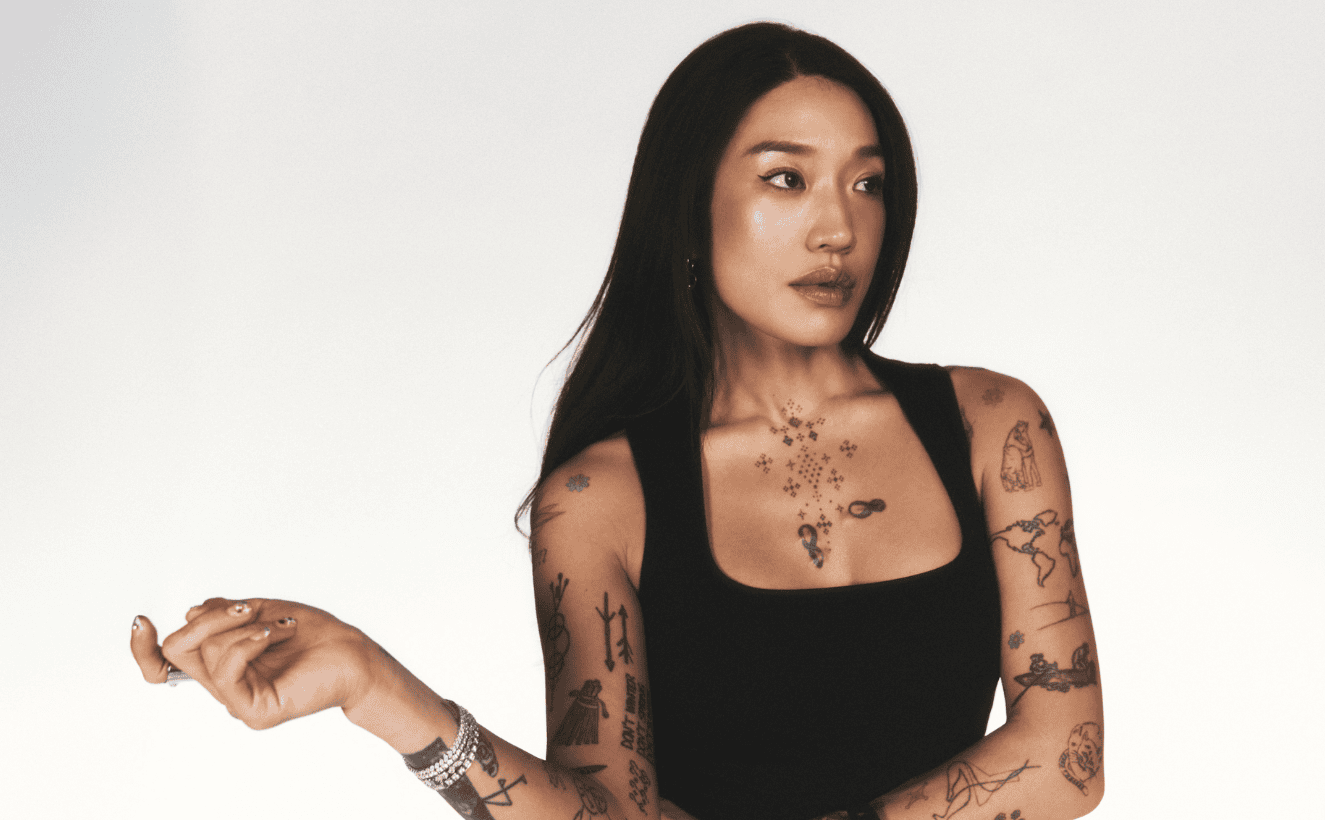
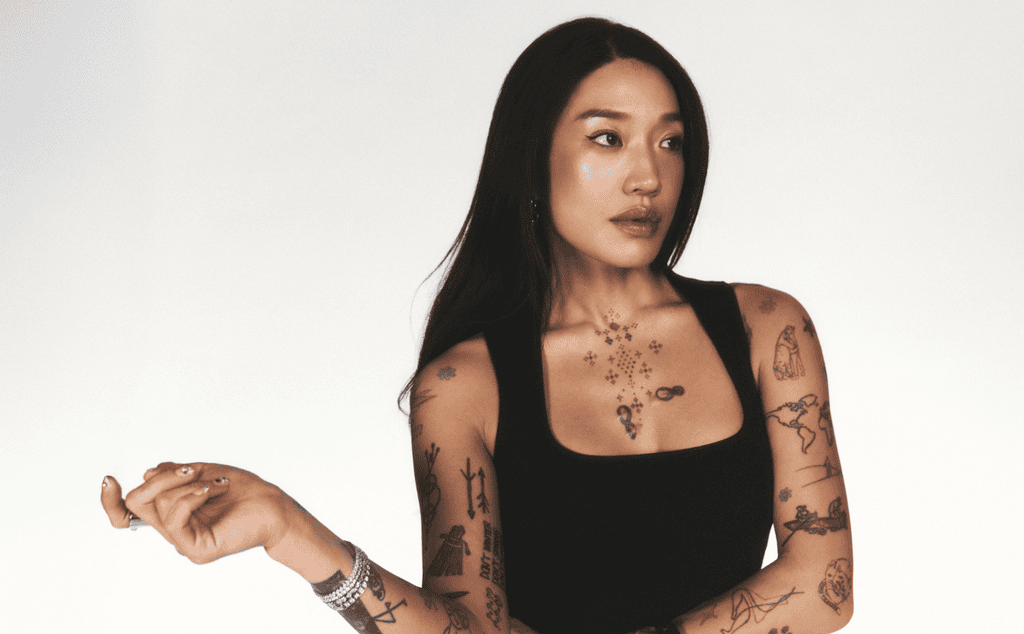
Peggy Gou has spent much of her career refusing to fit neatly into anyone else’s idea of what a DJ should be. Born in South Korea, shaped by her teenage years in London and hardened by a decade in Berlin, Peggy Gou has built an international career by combining house, techno, disco, Korean influences and an unmistakable visual identity. Her rise has made her one of the most recognizable figures in contemporary dance music.
Yet Gou’s story is about more than festival stages and chart success. Behind the glamorous image is a career built through persistence, experimentation and resistance to expectations about gender, nationality and appearance. From the clubs of south London to major festivals around the world, she has repeatedly chosen her own direction.
Peggy Gou Found Her Sound Between Seoul, London and Berlin
Before she became Peggy Gou, she was Kim Min-ji, a young woman growing up in Incheon with parents who expected a conventional academic future.
Music was already important to her. She played piano and listened to 1980s and 1990s K-pop, but her rebellious streak often put her at odds with her family. At 14, she was sent to London to improve her English and complete her secondary education.
Her introduction to London was hardly glamorous. Gou spent her teenage years in Croydon, learning to navigate a new country while speaking little English. The experience forced her to become independent quickly.
London eventually became far more than a place to study. After returning to South Korea for a period, Gou came back to the capital to attend the London College of Fashion. There, she discovered a club culture that would fundamentally change her life.
She began exploring venues including Fabric, Corsica Studios and Plastic People while collecting records from Soho’s Phonica Records. Her musical interests expanded from club sounds to artists such as Kraftwerk and disco pioneer Patrick Cowley.
That period also taught her an important lesson about DJing: the crowd does not have to be huge for a performance to matter.
From Club Regular to International DJ
Gou began developing her skills behind the decks at The Book Club in Shoreditch. The weekly residency gave her room to make mistakes, experiment and understand what worked on a dance floor.
Rather than obsessing over people who were not dancing, she learned to focus on those who were. That simple shift helped shape the crowd-conscious approach that remains central to her performances.
Her ambitions soon took her beyond London. At 21, Gou left a graduate position as a London correspondent for Harper’s Bazaar Korea and moved toward a career in music in Berlin.
The decision was difficult for her family to understand. Her father, a university professor who had grown up with limited financial resources, questioned whether music was another temporary phase. Gou, however, was determined to prove that her unconventional path could work.
Berlin became a crucial chapter. The city’s electronic music culture gave her access to a sophisticated club scene, but it also exposed her to discrimination and skepticism.
Gou has described working in a record store where male colleagues, in her account, treated her primarily as someone who could look attractive and sell records rather than as a serious music enthusiast. She says she was patronized, challenged over her musical knowledge and subjected to racist comments.
Instead of abandoning the scene, she used those experiences as motivation.
How Peggy Gou Helped Put K-House on the Map
Gou’s music gradually developed into a distinctive blend of electronic influences and Korean cultural references. Her approach incorporated Korean samples, language and traditional sounds alongside house and dance music.
This became associated with what was often described as K-house, connecting the growing global fascination with Korean culture to club music.
Importantly, Gou has resisted being boxed into a single genre. Her sets and productions draw from techno, Italo disco, Afro-influenced sounds, indie music and other traditions.
Peggy Gou’s Music Is Designed to Create a Feeling
For Gou, genre labels appear less important than emotional impact.
She has described her musical goal in simple terms: she wants listeners to feel positive and transported, almost as though they have escaped on holiday. That philosophy became particularly powerful with “(It Goes Like) Nanana.”
Released in 2023, the track combined a nostalgic house groove with an instantly memorable vocal hook. It eventually reached the UK Top 5 and introduced Gou to listeners far beyond the traditional house and techno audience.
The song’s success transformed her profile. Suddenly, children, older listeners, festival crowds and mainstream pop audiences knew her music.
Her subsequent achievements reinforced that crossover appeal. She released her debut album, I Hear You, in 2024 and became the first female DJ to headline Glastonbury’s Park Stage. She has also collaborated with major artists and built a substantial global following.
Peggy Gou Refuses to Separate Music From Fashion
Music is only one part of Gou’s public identity.
Her background in fashion has become an important element of her career, although she once believed it could undermine her credibility as a DJ. Early in her career, she deliberately dressed more conservatively because she wanted people to take her music seriously.
That changed after advice from a mentor encouraged her to treat fashion as an extension of her personality rather than something she needed to hide.
The shift proved significant. Gou began embracing distinctive clothing, collaborations and visual projects, helping establish a connection between electronic music, street style and luxury fashion.
Her influence has since extended beyond her own image. She has become an example of how an electronic artist can build a broader cultural identity without abandoning the music at the center of the career.
Challenging Sexism Without Letting It Define Her
Gou’s success has also exposed her to a familiar double standard.
As her profile grew, some critics attributed her achievements to her appearance or social media presence rather than her work. Such assumptions reflect a wider problem for women in electronic music, where technical ability and artistic credibility have historically been questioned in ways male performers rarely experience to the same extent.
Gou has spoken candidly about the challenges she faced as both a woman and a Korean artist in Berlin.
However, she has also been careful not to let those experiences become the entire story. Her response has generally been to continue working, develop her own sound and prove herself through results.
That determination has helped make her influence larger than her own discography.
Building a Legacy Through Gudu Records
In 2019, Gou founded Gudu Records, giving her another way to shape the electronic music landscape.
The label has also allowed her to support emerging artists and encourage female talent. Gou has spoken about wanting to be a positive example for younger musicians who may face some of the same barriers she encountered.
Her influence can therefore be measured in more than streams, festival appearances and chart positions. She has helped demonstrate that an Asian woman can occupy a highly visible position within a traditionally male-dominated global club culture.
From “Nanana” to a More Global Sound
Gou’s later work continues to show her willingness to experiment.
Her 2026 track “Wo, Man” brought her together with Nigerian Afrobeats singer Ayra Starr, creating a meeting point between electronic dance music and contemporary African pop.
The collaboration reflects Gou’s broader musical philosophy. Rather than protecting a rigid definition of her sound, she prefers to collect influences and allow different musical worlds to overlap.
That approach is increasingly relevant in global pop, where genre boundaries have become less rigid and audiences move easily between dance, hip-hop, Afrobeats, indie and electronic music.
Why Peggy Gou’s Story Still Matters
Gou’s career is compelling because her success did not come from following a straightforward formula.
She moved countries, changed careers, challenged family expectations and entered music scenes where she often felt like an outsider. She also refused advice that would have required her to become a more conventional commercial artist.
The result is a career that connects several worlds: Korean and European culture, underground clubs and mainstream festivals, music and fashion, artistic independence and commercial success.
Her London years remain especially important. The city was where she first discovered the club culture that shaped her musical identity, and she now regards London as a second home.
Her 2026 London performance at the Old Royal Naval College was another chapter in that relationship, bringing her career back to the city where much of her musical education began.
The Future of Peggy Gou
At 35, Gou has already achieved a career that many DJs spend decades pursuing. Yet she appears more interested in staying present than mapping out an entire future.
She has spoken about learning another language, continuing to explore new musical collaborations and creating music that gives audiences a memorable emotional experience.
That last point may be the key to understanding her longevity.
Peggy Gou does not seem interested in simply making records people play once. She wants music to become attached to memories: a festival, a summer night, a trip with friends or a moment that listeners remember years later.
From a teenager finding her way through south London to a global DJ, producer, label founder and fashion figure, her career has been defined by the same instinct that drove her as a child: refusing to let other people decide what she should become.
For Peggy Gou, the next chapter may be impossible to predict. That is precisely what makes it worth watching.