
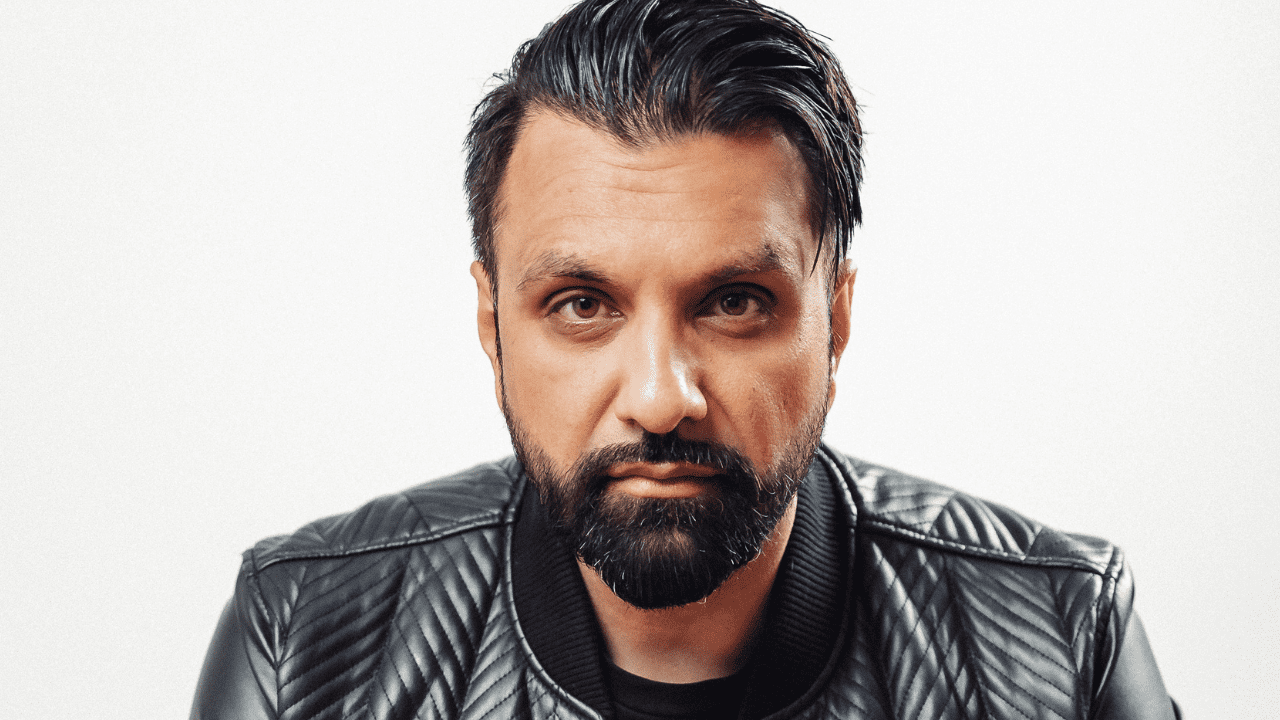
RANIUM a.k.a Ali Rana
Can you introduce yourself to our audience?
I’m Ali Rana, but I go by RANIUM. Born and raised in Norway, music was always part of who I was, even before I knew it. I was that kid at school parties showing up with a stack of dance CDs, curating the vibe before Spotify was even a thing. I convinced my dad to get me my first sound system, and around the age of 15, I started experimenting with production using eJay, back when music software came on CD-ROMs.
Later, I moved to London to study, and that’s where things really started to come alive. I found myself behind the decks at student union nights, spinning RnB, hip hop, and UK garage to packed rooms of 500–600 students. That feeling—the energy of the crowd, the shared pulse—it lit something in me. That was the spark.
Life took me on a bit of a journey; I finished my Master’s, stepped into the corporate world, and today I’m a Partner at a global management consulting firm. I’m also a family man. So balancing a leadership role, family life, and music has been an exercise in rhythm of its own, but when you love something, you find the time.
Over the past few years, I’ve returned to music with a deeper purpose. I’ve been producing house tracks layered with Afro and tribal rhythms, weaving in Eastern and organic textures to create something that melodically resonates far beyond borders. My vision is to make music that connects—a global sound that reflects cultural fusion and unity, where the groove is universal and the soul is unmistakably human.
It’s been absolutely humbling and energizing to see the response—from playlists to international support from well-known DJs and producers, the traction has been real. It feels like the project is naturally evolving, and it’s a beautiful thing to see the music finding its people. This next chapter feels right.
What inspired you to pursue a career in music, specifically in electronic genres?
For me, music has always been more than just sound. It’s been a creative escape, a place where I can disconnect from the noise of everyday life and reconnect with something deeper. What truly drew me into electronic music over the years was the freedom it offers. There are no boundaries. You’re not limited by structure, language, or genre. It’s just you, the rhythm, and the feeling you want to create.
As someone who juggles a demanding career and family life, music became this sacred space—a zone where I could lock in, tap into another vibe, and let go of everything else. When I’m producing or DJ’ing, I’m not thinking about emails or responsibilities—I’m in the moment, channeling energy, exploring sounds from different cultures, and letting creativity flow freely. That sense of freedom is addictive. For me, it’s like going to the gym regularly.
Electronic music gives me the tools to blend influences from all over the world—Afro rhythms, tribal drums, Eastern melodies—and shape something that feels both personal and universal. That’s the beauty of this genre: it allows full self-expression while still connecting with people on a primal, emotional level. That’s what keeps me inspired.
How would you describe your style and sound?
My sound lives in that space where global rhythm meets modern movement; a blend of Afrohouse, tribal house, and deep grooves layered with Eastern textures and global energy. It’s grounded, percussive, and soulful, but also refined—built for both the body and the mind. I’m always chasing that hypnotic zone, where people stop thinking and just feel.
What sets me apart as an artist isn’t just the sound—it’s the mindset. Coming from a background in global consulting, I bring with me a unique way of thinking: I analyze patterns, understand people, and read energy—whether it’s a dancefloor, a culture, or a shifting trend. I’ve spent years leading teams, navigating complexity, and making things resonate—and I apply that same strategic and emotional intelligence to music.
When I produce or DJ, I approach it with a balance of instinct and intention. I ask: what’s the mood, what’s the tension, where’s the release? I think in waves, in moments—not just in beats per minute.
My style is also rooted in duality: I’m a father of three and a partner in a corporate firm, but when I step into the studio or onto the decks, it’s a different dimension. That contrast sharpens my perspective. It keeps the music honest. It gives me range.
Ultimately, I’m not trying to follow trends—I’m building a sound that reflects who I am, where I come from, and the cultures I’ve moved through. It’s a global sound with soul. Something you can dance to, but also feel long after.
Tell us about your latest release.
My latest release is called Raqs Night—“Raqs” meaning dance in several Eastern languages. The idea behind it is about movement—not just physical, but emotional too. A kind of dance that feels rooted in something older, deeper.
The track came together late one night after the house was asleep. I was scrolling through sounds and Eastern instruments I’d collected on a trip years ago—street rhythms, voices, raw textures—and something just clicked. I started layering Afro percussion, built a tribal groove, and wove in this haunting Eastern motif that felt like it had always been there.
It’s a track about connection and tension, about the feeling when music doesn’t scream for your attention but quietly demands it. It draws you in, holds you, and doesn’t let go. Raqs Night is dance music, but it’s also storytelling. A sonic journey meant to be felt as much as it’s heard.
What message or feeling do you want listeners to take away from this release?
I want listeners to feel transported, like they’ve stepped into a different world where rhythm leads and language fades. Raqs Night is about release, elevation, and connection through sound. If it moves your body and stirs something deeper, then it’s done its job.
Can you walk us through the creative process behind this project?
The process behind Raqs Night was less about sitting down with a plan and more about chasing a feeling by looking through sounds I had collected on a trip. I remember opening a blank music project and just letting the rhythm guide me—no agenda, just instinct. The zurna instrument came in early, and it immediately set the tone. It had this haunting, almost spiritual quality that made everything else fall into place around it.
I’m very detail-driven, so I kept sculpting the percussion until it felt like it was breathing, not just looping. I also bounced ideas off a close friend whose taste I really respect. We’d send bits back and forth, not overthinking it—just reacting to what felt alive in the track.
It wasn’t rushed. I gave it space. Let the tension build naturally. The drop came late in the process, but when it landed, I knew the track had its core.
How does this release differ from your previous work?
With Raqs Night, I wanted to push beyond the boundaries of what I’ve done before. My earlier releases leaned more into pure Afrohouse and melodic techno, focused on groove and atmosphere, but this time, I wanted to dig deeper into sound and storytelling.
Over my past few projects, I’ve been exploring different instruments, textures, and cultural layers, and this release is part of that evolution. The zurna instrument became the centerpiece, and building the track around such a distinct, expressive instrument brought a new kind of emotional weight to the process.
For me, this track represents exploration—not just sonically, but creatively. It’s less about following a formula and more about trusting the instinct to blend worlds that don’t usually meet. That’s what sets it apart.
What do you think is the biggest challenge for artists in the electronic music industry today?
There’s a huge amount of amazing music out there right now, and an incredible number of skilled artists and producers pushing boundaries. Ironically, that’s the biggest challenge: cutting through the noise. With so much talent and content, getting noticed, staying relevant, and building a meaningful connection with listeners can feel like finding your way through a haystack.
It’s not just about making great tracks—it’s about timing, consistency, community, and sometimes just luck. The playing field is global, and attention spans are short. But at the same time, that challenge is also the opportunity: if your sound is true and you stay persistent, it will find its place. Trust me.
What role do events, collaborations, or labels play in shaping your career?
For me, collaborations and labels aren’t just exposure—they’re creative fuel and your partner. They want to help you reach your goals. It’s like a win-win situation. You win, your partner wins. They also open new perspectives, challenge your comfort zone, and help your music reach people you might never reach on your own.
Working with Cafe De Anatolia has been a special moment in my journey—not just because of their global reach, but because they truly get the fusion of sound and culture I’m exploring. That kind of alignment is rare, and it pushes you to go deeper as an artist. Also, through my collaboration with Cafe De Anatolia, I will have the opportunity to perform at events I would not have otherwise.
At the end of the day, music is connection. And the right platforms and people help amplify that connection in meaningful ways.
Do you have any advice for aspiring artists looking to break into the scene?
I’ve known the music industry for years—not just as an artist, but through the lens of strategy and leadership. My background is in management consulting, so naturally, I take a structured approach to things. And when it comes to breaking into the scene, my advice is this:
Build and maintain the right connections. Be bold and unafraid to reach out—some of the biggest opportunities I’ve had started with a simple message and a lot of “no’s” before that. You’ve got to be shameless in a good way. Don’t take rejection personally; learn from it and move forward.
Create content. A lot of it. Don’t wait for the perfect track. Perfection is a trap, and most of the time, only you will hear the tiny imperfections in your production. Get it out there. Be consistent.
Also, start producing. DJ’ing is great, but if you want to be heard globally, you need to craft your own sound. Develop a vision and a brand—something that reflects you—and stick to it.
And finally, don’t do this for the money. Do it because you have something to say through sound. You’re sharing your identity, your passion, and your story. That’s what connects—and that’s what lasts.
What can your fans expect next?
Let’s just say… we’re only getting started.
I’ve got some serious collaborations cooking, including projects with world-renowned artists I’ve looked up to for years. The sound is evolving, but the soul stays the same: rhythm-driven, culture-infused, and built for movement.
Expect deeper grooves, bolder drops, and music that pushes boundaries while still feeling personal. I’m not here to follow trends—I’m here to carve my lane. And what’s coming next is going to hit different.
Stay close. This next chapter’s got weight.
“Raqs Night” by RANIUM is released on 27th May 2025 via Cafe De Anatolia