
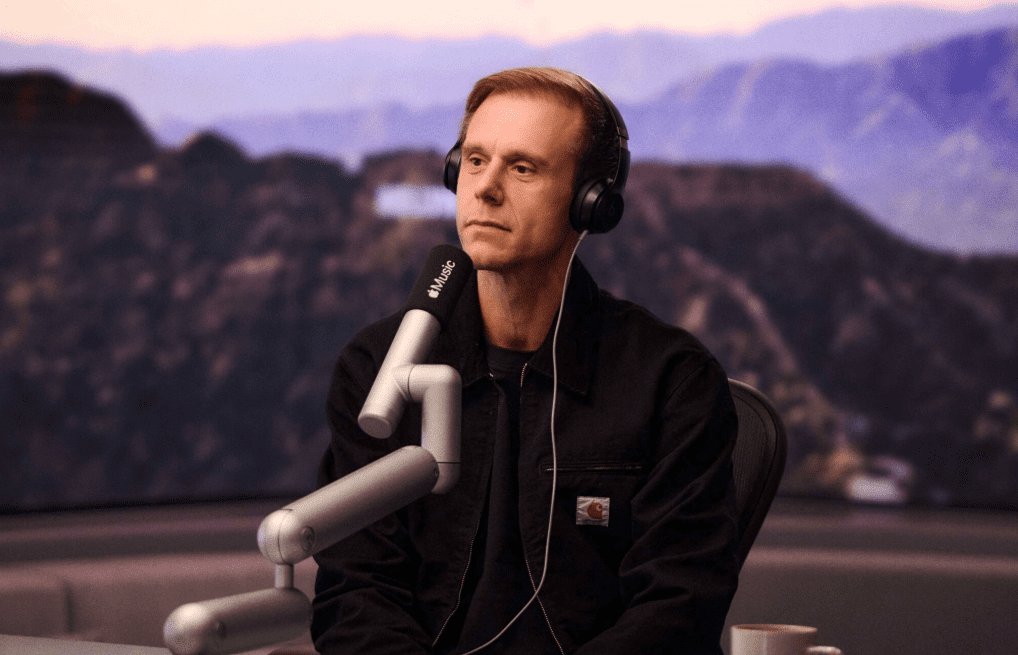
ew artists in electronic music have shaped a genre as profoundly as Armin van Buuren. Yet behind the global success, stadium-level tours, and the enduring legacy of A State of Trance, there was a moment when even one of trance’s most iconic figures questioned everything.
Speaking during a recent appearance at the Winter Music Conference in Miami, Armin reflected on a turning point that came in 2011—when he was already operating at the peak of his international career. His radio show had become a worldwide institution, his productions were defining festival soundscapes, and his name had become synonymous with modern trance. And yet, internally, the pressure of a rapidly shifting electronic music landscape began to weigh heavily.
At the time, trance music was undergoing a difficult identity crisis. The genre that once dominated global stages was being pushed to the margins as new waves of electro house, progressive sounds, and harder-edged festival styles began to take center stage. For Armin, this shift was not just stylistic—it was deeply personal.
“But, as they say, you should always stop at a peak. By 2011, I seriously considered quitting, but I just felt the music.”
That single reflection captures the emotional tension of an artist caught between legacy and uncertainty. While many would have seen his position as untouchable, Armin’s honesty reveals a different reality: even the most successful creators are not immune to doubt when the cultural tide shifts beneath them.
Rather than stepping away, he chose to stay—and that decision would quietly become one of the defining acts of his career. As electronic music evolved through the 2010s, the very elements once pushed aside began to resurface. Melodic structures, emotional builds, and trance-inspired progressions slowly returned through new generations of producers across techno, progressive house, and festival-driven electronic music.
In many ways, Armin van Buuren’s persistence helped preserve the emotional DNA of trance during a period of fragmentation. His continued leadership through A State of Trance ensured that the genre maintained both visibility and cultural relevance, even as trends shifted around it.
Today, Armin stands not only as a pioneer of trance but as a symbol of endurance within an industry defined by constant reinvention. His presence at major festivals and ongoing releases reflect a career that has managed to evolve without abandoning its core identity.
Looking back, his near-decision to quit in 2011 feels less like a moment of weakness and more like a pivotal crossroads—one that ultimately reinforced his connection to the music he helped build. In an industry where trends come and go with relentless speed, Armin’s story is a reminder that longevity is often shaped not by certainty, but by the decision to continue when everything feels uncertain.
And perhaps that is why his legacy still resonates so strongly today—not because he never doubted, but because he chose to stay anyway.